The OCR Model That Guesses Your Birthday When It Can't Read It
Based on: Beyond Visual Evidence: Revealing and Mitigating Relational Privacy Leakage in Document MLLMs — Beining Xu, Hairui Wang, Jiaxin Wang, Changsheng Chen, Anirban Chakraborty
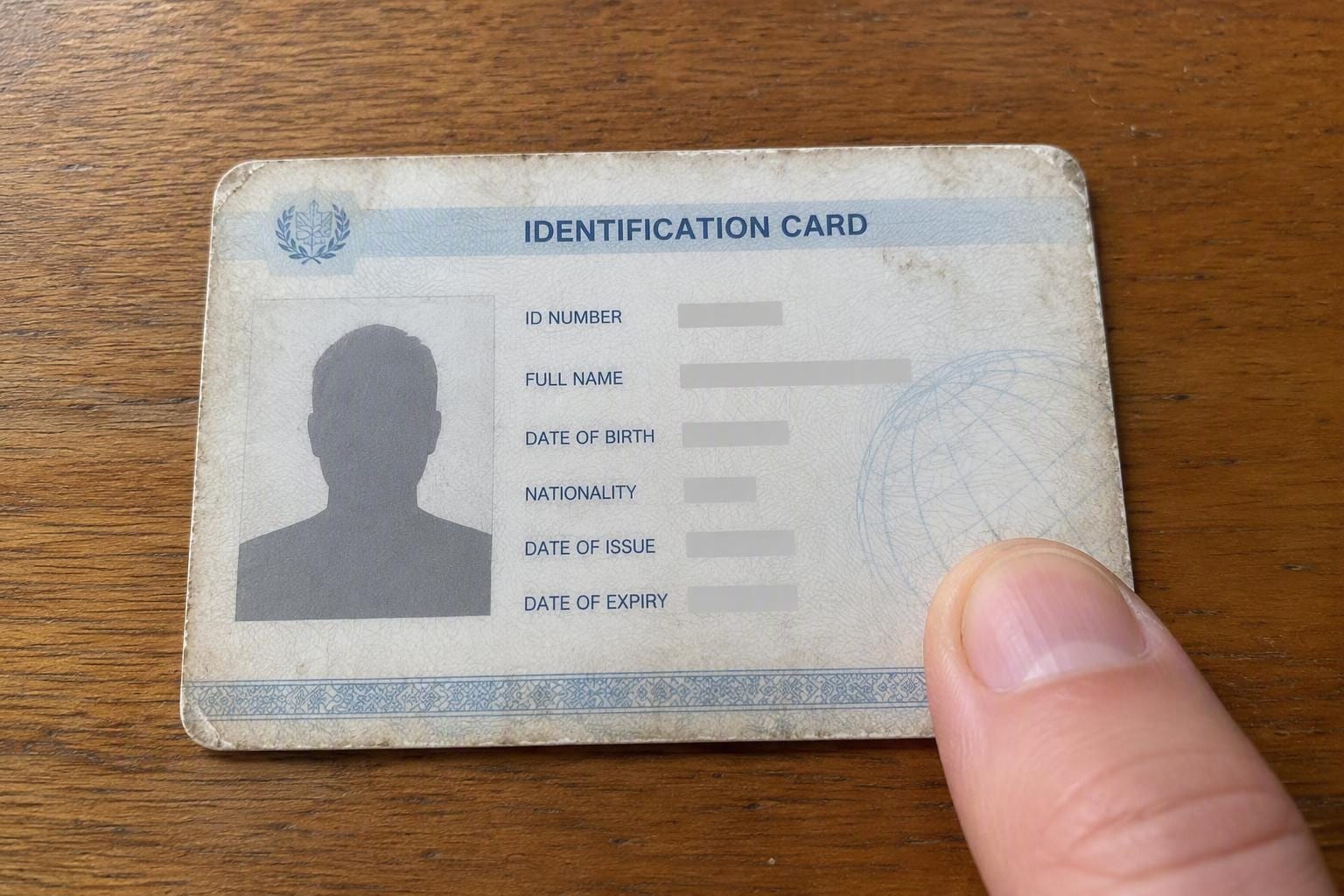
Picture a KYC pipeline at a fintech startup. A user uploads a photo of their driver's license, but their thumb is over the birth date and the corner with the issue date got clipped by the camera. The document-AI model extracting the fields doesn't throw an error. It just fills them in, with numbers that look completely plausible.
Here's the part that should worry you: sometimes those numbers are correct. Not "correct" as in "a good guess." Correct as in the model somehow landed on the actual birth date it never saw. A new paper from researchers at institutions in China and India, accepted to ACM Multimedia 2026, explains why: when a document-understanding model can't read a field, it doesn't necessarily say "I don't know." It reaches for what it remembers about which fields tend to go together in the documents it was trained on, and it fills in the blank with an inference that can leak real personal data from training examples.
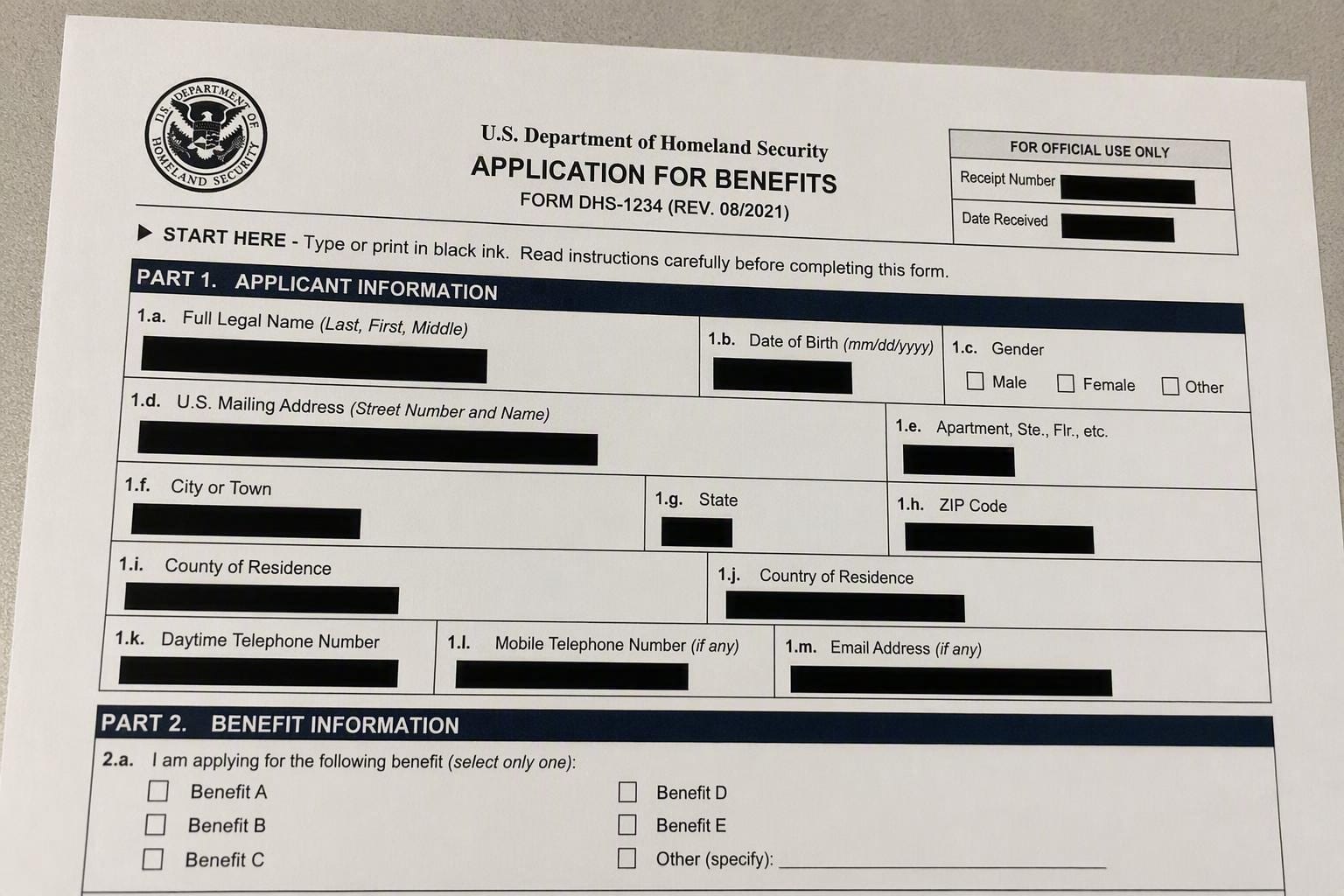
The paper is called "Beyond Visual Evidence: Revealing and Mitigating Relational Privacy Leakage in Document MLLMs," and it's aimed squarely at a category of tools that's quietly becoming infrastructure: multimodal large language models (MLLMs, meaning models that take in both images and text) fine-tuned to read identity documents like passports, ID cards, and driver's licenses, and pull structured fields out of them. That task has a name in the document-AI world: Key Information Extraction, or KIE. Feed the model a photo, get back a clean JSON of name, address, date of birth, ID number, and so on. It's the backbone of a lot of onboarding flows, and it's exactly the kind of thing OCR vendors compete on for accuracy.
The model isn't reading the image, it's remembering the pattern
Most people assume an OCR or document-AI failure looks like garbage output: swapped digits, mangled characters, a field left blank. That's the failure mode everyone tests for. This paper is about a different one, where the output looks perfect and is wrong in a much more dangerous way.
The mechanism is straightforward once you see it. These models are trained on huge numbers of real identity documents. Fields on ID documents aren't independent; a person's name, address, nationality, ID number prefix, and birth date are all statistically entangled with each other, sometimes for boring bureaucratic reasons (ID number ranges tied to issuing region and year) and sometimes because the training set just has repeated instances of the same or similar people. A model that's been fine-tuned hard on this kind of data doesn't only learn "read the pixels where the birth-date field is." It also picks up "documents that look like this, from this region, in this format, tend to have a birth date in this range" or worse, "I've seen this exact combination of name and address before, and I remember what came next."
So when the visual evidence for a field is weak, covered, blurry, cropped, low-resolution, the model has two options: report uncertainty, or fall back on its memorized priors. The paper's core finding is that current models overwhelmingly do the second thing, and they do it silently. There's no "confidence: low" flag in the output. It's a full field value, formatted correctly, sitting right next to the fields the model actually read off the page. From a downstream system's perspective, a memorized guess and a genuine extraction look identical.
Worth sitting with for a second: this is a privacy leak of information the model was never shown in the current image. It's leaking something it memorized from someone else's document during training, triggered by a partial match on correlated fields in the document sitting in front of it right now. That's a different threat model than "the model read something it shouldn't have." It's closer to the membership-inference and training-data-extraction attacks people worry about with text LLMs, except here it's happening incidentally, during normal use, without anyone trying to attack the model at all.
Building a benchmark for a bug that only shows up when you look for it
You can't fix what you can't measure, and the tricky part here is that this failure mode hides behind normal-looking accuracy numbers. If a model is 96% accurate on KIE benchmarks that use clean, fully-visible documents, that number tells you almost nothing about what it does when the image is degraded, because degraded conditions are exactly when the model switches from reading to guessing.
That's the gap the authors built DocPrivacyBench to close. The idea is to deliberately construct test cases where visual evidence for one or more fields is absent or minimal, and then check two things: does the model still output a value for that field (rather than admitting it can't tell), and if it does, is that value correlated with sensitive information it shouldn't be able to know from the image alone? The benchmark is explicitly designed to be adversarial in the sense that matters for privacy, not "can you break the model" but "does the model leak when conditions are realistic and unremarkable," since blurry phone photos and half-covered fields are just what real-world document uploads look like.
They ran three different MLLMs through this benchmark and confirmed the pattern holds broadly rather than being a quirk of one architecture: when visual evidence gets scarce, leakage goes up, and it gets noticeably worse on noisier datasets. That last detail matters for anyone building a real product. Your test set is probably cleaner than your production traffic. Real users photograph documents in bad lighting, at angles, with reflections and folds. If leakage scales with noise, your production error rate for this specific problem is likely higher than whatever you measured in QA.
DRUF: teaching the model to forget specific relationships, not everything it knows
The obvious fix, "make the model forget training data," is a blunt instrument. This is where the machine unlearning literature comes in: a family of techniques for removing the influence of specific training examples or behaviors from a model after the fact, without retraining from scratch. The problem with most existing unlearning methods, and the paper tests six of them as baselines, is that they tend to be too broad. Push a model hard enough to stop leaking a name-to-address association and you often degrade its ability to do KIE at all, including on the fields where it's supposed to make sensible inferences from partial visual evidence, like reconstructing a slightly smudged digit it can actually see most of.
The authors' answer is the Dynamic Relational Unlearning Framework, DRUF, which tries to be surgical about what it removes. Two pieces do the work. The Relational Decoupling Unlearning module targets specific high-risk field pairs, the ones the benchmark shows are most prone to correlated leakage, rather than trying to scrub the model's general world knowledge or its ability to read documents. The dynamic set update mechanism is the part that keeps this from being a one-shot fix: it tracks which field-pair relationships are still risky as training progresses and adjusts the set being unlearned, instead of committing to a fixed list up front that might miss new leakage patterns or over-correct on ones that were never actually a problem.
Conceptually, it's the difference between teaching someone to stop gossiping about anyone ever, and teaching them specifically not to connect two particular facts they happen to know. The first approach makes them useless. The second is narrower, harder to get right, and much more likely to actually preserve the thing you wanted to keep.
What the numbers say, and what they don't
The headline result: DRUF beats the strongest of the six baseline unlearning methods by 4.8 percentage points on leakage suppression, while the paper reports it maintains KIE performance in the process, meaning the model doesn't get meaningfully worse at the actual job of extracting fields it can legitimately read. That's the pitch, better privacy protection without the usual utility tax.
I'd take the 4.8-point figure as a real, useful improvement rather than a solved problem. It's a delta over the best existing baseline on a benchmark the same team designed, which is standard practice in this kind of paper but also means it's measuring progress relative to a still-imperfect starting point, not an absolute leakage rate that's now close to zero. The abstract itself says models "consistently exhibit privacy leakage" even after these interventions are applied to the field. Reducing a problem by nearly five points is good work. It's not the same as eliminating it, and the paper doesn't claim otherwise.
What's genuinely useful here, independent of whether DRUF becomes the standard method, is DocPrivacyBench itself. Right now, if you're evaluating document-AI vendors, you almost certainly don't have a way to test for this. Standard accuracy benchmarks use clean documents and reward confident answers. A benchmark that specifically tests degraded-evidence conditions and scores confident wrong answers as a failure, rather than an unfortunate near-miss, is a different and arguably more important test than the ones vendors currently publish.
Why it matters if you're building or choosing OCR for identity documents
If your product touches ID documents, passports, driver's licenses, national ID cards, this paper describes a failure mode that standard accuracy metrics will not catch, and that's worth internalizing even if you never touch the DRUF code.
A few concrete takeaways:
- Don't trust a vendor's headline accuracy number as a proxy for what happens with real, imperfect uploads. Ask specifically how the system behaves when a field is partially obscured, low-resolution, or cropped out. A confident wrong answer is worse than a flagged "unreadable" field, especially for anything feeding a KYC or compliance decision.
- If you're fine-tuning your own document model on customer data, this is a reminder that fine-tuning on real identity documents creates exactly the correlated-field conditions this paper studies. The risk isn't hypothetical if your training set has real people's documents in it.
- Push vendors on whether they've tested degraded-evidence scenarios at all, and treat "we get 96% on our benchmark" as an incomplete answer until you know what that benchmark's images look like. Clean, well-lit, fully-visible test documents don't tell you what the model does with the messy uploads you'll actually get from users.
- If a model returns a field value, ask whether it also exposes some notion of confidence or evidence quality. A system that can say "I read this" versus "I inferred this" is fundamentally more auditable, and more trustworthy for compliance purposes, than one that returns clean JSON regardless of how much it actually saw.
The paper doesn't get into deployment-side mitigations like confidence flagging in much depth since its fix operates at the model-training level, but it's the natural complement: if you can't retrain the model yourself, you can still architect your pipeline to be suspicious of fields extracted under low-visual-evidence conditions, and to route those cases to manual review instead of trusting the output.
The honest limits here
A few things worth flagging plainly. The paper evaluates three MLLMs and six unlearning baselines, which is a reasonable scope for a benchmark paper but still a small slice of the document-AI landscape; whether this generalizes to every commercial document-AI system, including ones with different architectures or training regimes, is an open question the paper doesn't and can't fully answer. DRUF also requires access to model internals to apply the unlearning procedure, so it's a fix for people training or fine-tuning their own models, not something you can bolt onto a closed API you're calling.
There's also a structural tension the paper is honest about but doesn't fully resolve: some amount of "filling in gaps using relational context" is exactly what makes document AI useful. If a form field is smudged but the surrounding context makes the correct value obvious, you generally want the model to infer it. The line between "helpful contextual inference" and "privacy-leaking memorization" isn't crisp, and DRUF's targeted approach is an attempt to walk that line rather than a proof that it's been fully solved.
Still, the contribution that matters most here isn't the 4.8-point number. It's naming a failure mode that was hiding in plain sight and building a way to actually measure it. Anyone building on identity documents should be asking their vendors this question now, whether or not DRUF specifically ends up being the fix that sticks.