The Video AI That Has to Get Your Logo Right
Based on: HOMIE: Human-object Centric Video Personalization via Multimodal Intelligent Enchancement — Yiyang Cai, Nan Chen, Rongchang Xie, Junwen Pan, Chunyang Jiang, Cheng Chen, Wen Zhou, Zhenbang Sun, Wei Xue, Wenhan Luo, Yike Guo
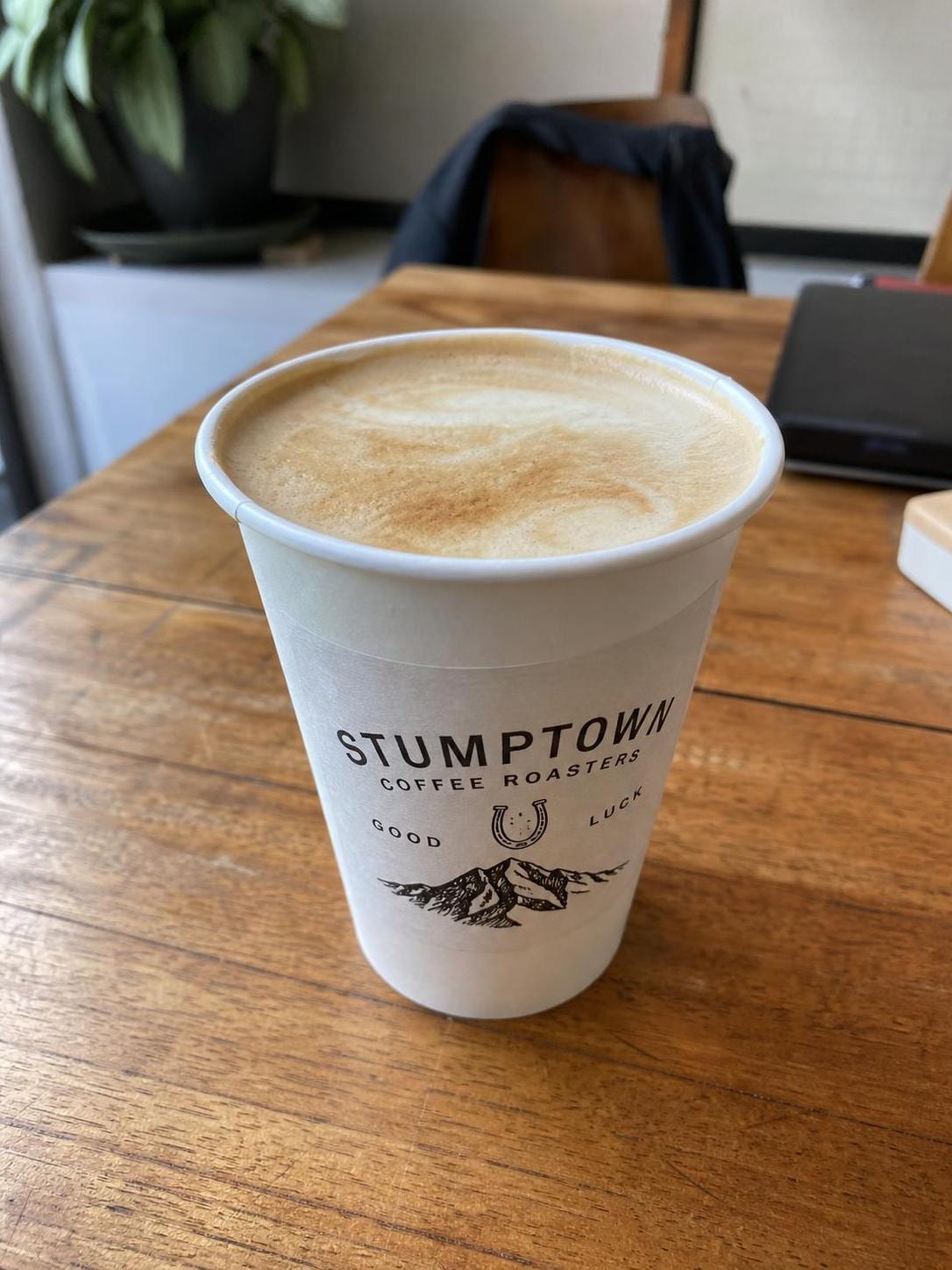
Picture a small coffee brand that wants a quick product video: someone unboxing a bag of beans, the logo clearly visible, the roast name readable on the label. They don't have budget for a shoot, so they turn to an AI video generator, feed it a photo of the bag and a photo of a model, and ask for a 10-second clip.
What comes back looks great at a glance. The hands are right, the lighting is right, the person looks like the reference photo. Then you zoom in on the label. The brand name has an extra letter. The roast date is a smear of pixels pretending to be text. The logo is close enough to be recognizable but wrong in a way any customer would notice immediately.
That gap, between "looks photorealistic" and "the text is actually correct," is exactly what a new paper called HOMIE (Human-object centric video personalization via Multimodal Intelligent Enhancement) is trying to close. It's not an OCR paper in the traditional sense. It's a video-generation paper. But buried in its architecture is a genuinely interesting move: using OCR output as a steering wheel for a generative model, rather than as the final product. If you work with OCR at all, that reversal is worth understanding.
What "human-object centric video personalization" is actually asking for
The paper's full name for its task is HOCVP: human-object centric video personalization. Strip the jargon and it means this: given a photo of a specific person and a photo of a specific object, generate a video where that person is convincingly interacting with that object, doing whatever the prompt describes.
This sits one level up from the video-generation demos you've probably already seen. Most of those take a single reference image (a person, say) and animate it. HOCVP has to juggle two separate references at once, a human and an object, and get both the appearance and the interaction right. The model has to know that a coffee bag gets held a certain way, that a guitar gets strummed with the right hand position, that the object in someone's grip should stay recognizably that object across every frame, not drift into something generic.
The paper splits its reference inputs into two categories, and the distinction matters for understanding the rest of the design:
- Inter-subject references: separate images of the human and the object being combined for the first time, like a photo of a model plus a photo of a product.
- Intra-subject references: multiple images of the same subject, such as a product photographed from three angles, or a product photo paired with an OCR reading of its label.
Most prior work handles the first case reasonably well and mostly ignores the second. That's the gap HOMIE is aiming at.
The problem with objects that aren't really objects
Here's the part that made me sit up: the paper singles out logos as a hard case, and it's hard for a reason that isn't obvious until you say it out loud. A logo isn't an object you pick up. It's a mark that has to land on something else, correctly.
If you ask a video model to put "the Nike logo" into a scene, you're not asking it to render a physical thing sitting on a table. You're asking it to reason about which surface the logo belongs on: a shoe, a shirt, a cup, a cap, and then place it there with the right scale, angle, and legibility as the camera moves. That's a step of abstract reasoning most video diffusion models were never built to do, because their training taught them to reconstruct pixels, not to figure out where a mark for a company's identity is supposed to go.
The paper's answer is to lean on a multimodal large language model, or MLLM, a model that can take in images and text together and reason about what it's looking at, the same category of model behind tools like GPT-4V or Gemini's vision features. Feed it a photo of a logo and the phrase "attach this to something it would plausibly go on," and it can make that inference in a way a pure image-to-video pipeline can't.
That's the clever half of the paper. The other half is about something closer to home for anyone who cares about OCR: keeping small text legible when the model has to reproduce it from a reference image.
Where OCR comes back into the picture
Diffusion models, the family of models behind most modern image and video generation, are notoriously bad at small text. Ask one to draw a street sign or a book cover and you'll usually get a plausible-looking blur of not-quite-letters. Feeding the model a reference photo helps, but it doesn't fully solve the problem, because the model still has to infer, frame by frame, exactly which pixels form which characters.
HOMIE's fix is to hand the model an OCR map alongside the reference image: a structured extraction of what text is on the label and roughly where it sits, produced by an OCR system before the video generation even starts. Instead of asking the model to reverse-engineer the text purely from pixels, it gets the answer sheet up front and only has to worry about rendering it in the right style, at the right angle, under the right lighting.
This is a small detail in the paper's overall framing, but it's the detail that should catch an OCR-focused reader's attention. It's a clean example of OCR output being consumed by another model, not by a human reading a screen. The accuracy of that upstream OCR step becomes a hard ceiling on how good the final video's label text can be. Garbage in, garbage rendered.
The first ingredient Project 365(2) Day 290 — by Keith Williamson via flickr, BY 2.0.
How the pieces actually get wired together
The engineering challenge here isn't "should we use an MLLM," it's how to plug one into a video diffusion model without breaking either of them. Two options exist, and both have real costs.
You could route the MLLM's understanding through the text encoder, the component that turns your prompt into something the diffusion model can act on. But text encoders are built for language, not for image-level semantic reasoning, so cramming reference-image understanding through that pipe tends to blunt the model's ability to actually follow the text prompt.
Or you could retrain an adapter that projects the MLLM's internal features into the diffusion model's own token space, a process the paper calls "costly re-alignment." It works, but it's expensive to train and easy to get wrong, and past HOCVP methods that have tried it are part of what the paper is positioning itself against.
HOMIE picks a third route: it injects the MLLM's features directly into the video model's self-attention layers, the mechanism a transformer uses to let every token look at every other token and decide what's relevant. The MLLM's semantic understanding of the reference images sits right next to the diffusion model's own visual tokens (called VAE tokens, since they come from the variational autoencoder that compresses images into the diffusion model's working representation), and the attention mechanism lets them influence each other directly. No retraining a bridge between two separate feature spaces, no rerouting through a text encoder that wasn't built for this.
The catch: once you dump MLLM features and VAE tokens into the same attention layer, the model needs some way to tell them apart. That's the job of what the paper calls modality-reference embedding, a tag added to each token marking where it came from, whether it's raw visual content, MLLM-derived semantic understanding, or a reference image showing a different angle of the same subject. Think of it as a name tag on every token at a meeting where three very different departments showed up. Without the tag, attention has no way to weigh "this came from the model that understands what a logo is" differently from "this is a pixel from the actual product photo."
What the demos actually show
The paper reports state-of-the-art results on HOCVP tasks generally, though the material I could pull together didn't include a clean numeric benchmark table, just qualitative video comparisons against four existing systems: SkyReels-A2, BindWeave, UniVideo, and VINO. The demos split into four scenarios that map directly onto the paper's own framing: general human-object interaction, logo personalization onto plausible surfaces, multi-view consistency across several reference angles of the same product, and OCR-map-guided text fidelity on product packaging.
The examples lean commercial: coffee cups, chocolate bars, potato chip bags, milk cartons, someone playing guitar or petting a cat while holding a branded product, all rendered at up to 1280x720 and in vertical formats suited to livestream-style content. That's not incidental. The paper is clearly aimed at the world of AI-generated product marketing, where a brand wants a believable video of "someone using our product" without a photo shoot, and where getting the label wrong is the difference between usable and embarrassing.
Why it matters for people building or choosing OCR
This paper is a reminder that OCR's job description keeps expanding. It used to mean "turn a scanned page into text a person can search." Increasingly, it means "produce a machine-readable answer that another model consumes as a control signal," and that second use case has different requirements than the first.
A human reading OCR output can tolerate a garbled character or two if the gist is clear. A downstream generative model treating that OCR output as ground truth for what it's about to render can't. If the OCR map says a label reads "ORGANIC" and the real text says "ORIGINAL," that error doesn't stay contained, it gets baked pixel by pixel into a video someone might actually publish. As more products chain OCR into generation pipelines like this one, "good enough for a human skim" stops being the bar. The OCR step needs to be right, not approximately right, because nothing downstream is going to catch its mistake.
It's also a useful data point on where OCR's economic value is heading. Reading a receipt for a bookkeeper is one market. Feeding a structured, positionally-aware text extraction into a video model that's about to render a product label at scale, for potentially thousands of generated ads, is a different one, with different tolerance for error and a different willingness to pay for accuracy. Worth watching if you're on the OCR side of that pipeline rather than the video side.
The honest caveat: this paper landed on arXiv on July 20, 2026, a day before this post, so there's been no time for independent replication or third-party benchmarking. The comparisons offered are qualitative demo videos against four named baselines, not a scored leaderboard. Whether HOMIE's approach holds up outside its own curated examples, especially on messier real-world labels with dense fine print rather than a clean brand name, is still an open question. But the underlying idea, that OCR is useful as an input to generation and not just an output for humans, is one worth remembering the next time someone asks what OCR is even for anymore.