The OCR Model Is Reading Your Blank Margins, and That's Why It's Slow
Based on: LayoutLite: Token-Level Implicit Layout Analysis for Efficient Document OCR — Xudong Liu, Bicheng Wan, Yulin Jin
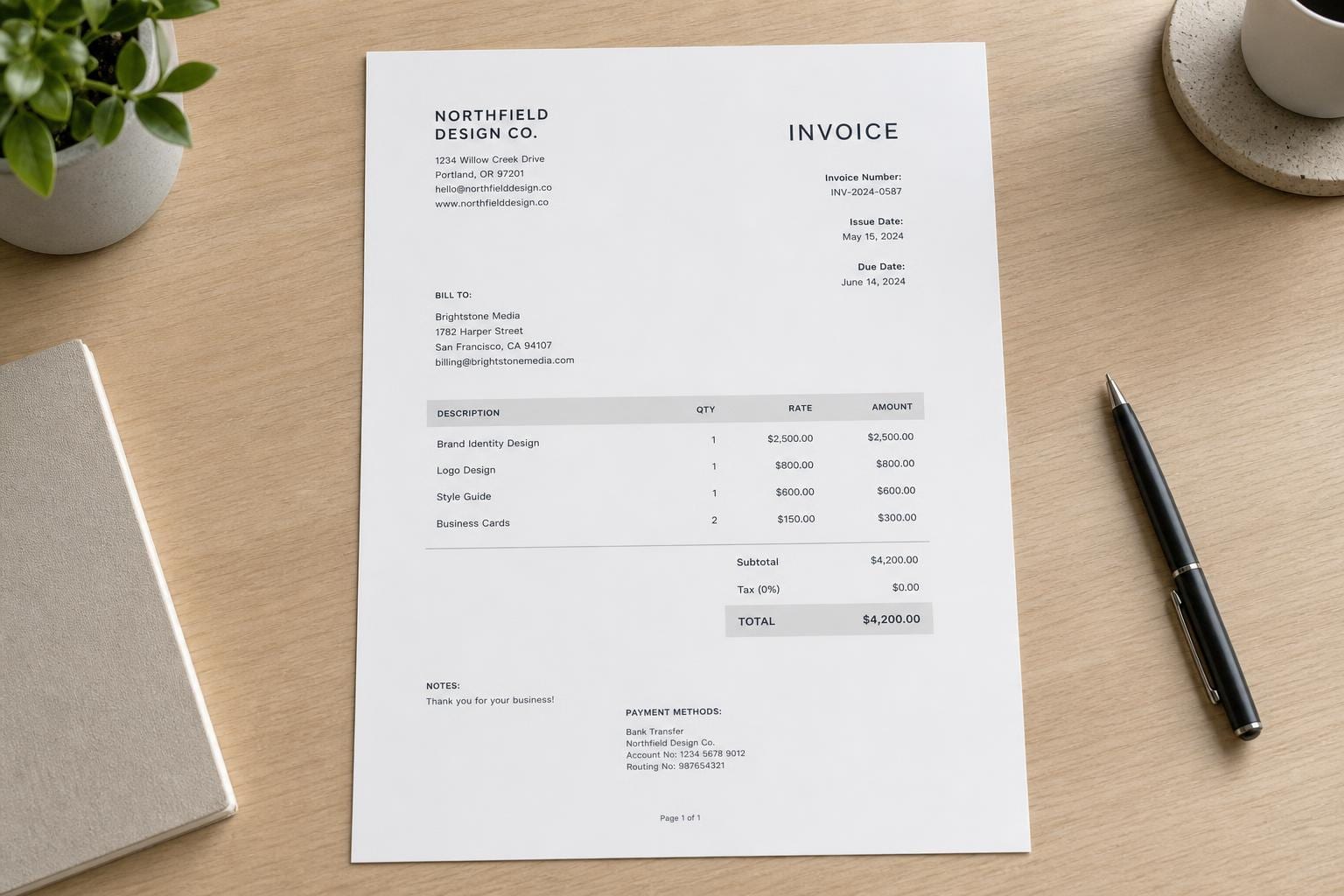
Open any invoice, receipt, or scanned form on your desk and look at it the way a machine does. Maybe a fifth of it is text. The rest is white space: margins, gaps between line items, the empty half of a signature box. A human eye skips that instantly. A vision-language model does not. It slices the whole image into a grid of tokens, the small chunks a model turns pixels into before it can "think" about them, and feeds every single one, blank patches included, into an expensive language decoder. On a dense multi-column report, that can mean thousands of tokens spent doing nothing but describing nothing.
That waste is the target of a new paper, LayoutLite: Token-Level Implicit Layout Analysis for Efficient Document OCR, from researchers Xudong Liu, Bicheng Wan, and Yulin Jin (posted to arXiv July 24, 2026). Their claim: you can throw out up to half of a document image's visual tokens before they ever reach the language model, and the OCR output barely changes. On two production-grade OCR models, they cut prefill latency, compute cost, and memory use by more than 40%, with only a small tax paid back in extra processing.
Why "just compress the image" doesn't work for OCR
Token compression already exists as a technique for VLMs generally. If you're asking a model "what's in this photo," you can safely throw away a lot of visual detail. A blurry corner of sky is still recognizably sky. The model doesn't need every pixel to answer correctly.
OCR breaks that assumption. A single stray token might be the only place in the image where a decimal point, a small superscript, or a faint stamp actually lives. Compress too aggressively, using a method built for general image understanding, and you don't lose vague background detail, you lose the exact character the whole task depends on. The authors call this out directly: generic compression methods "may remove OCR-critical fine-grained details." That's the tension LayoutLite is built to resolve: cut token count aggressively, but only the token count that's actually spare capacity, not the tokens carrying information.
The other constraint worth sitting with is what "layout analysis" usually costs. The traditional way to find blank regions in a document is to run an explicit layout detector first: a separate model that draws boxes around paragraphs, tables, and headers before OCR even starts. That's an extra model, an extra inference pass, and an extra thing that can be wrong. LayoutLite's pitch is doing this analysis implicitly, inside the pipeline that's already running, instead of bolting on a second system.
How it actually works: a bouncer standing between the eyes and the brain
Picture the standard OCR-VLM pipeline in three stages: a vision encoder turns the image into visual tokens, a language decoder reads those tokens and writes out the text. LayoutLite inserts itself in between, as what's essentially a bouncer deciding which tokens are worth the decoder's time.
Concretely, three things happen:
- It looks at more than the last layer. Vision encoders build up representations in layers, and later layers tend to specialize in high-level semantics while earlier layers hold onto fine spatial detail. LayoutLite aggregates multi-layer visual representations rather than reading only the encoder's final output, so it's judging each token with both the big-picture context and the fine-grained signal in view.
- It scores every token for importance. A lightweight scoring network, small enough not to erase the speed gains it's trying to create, assigns each visual token an importance score. Low-scoring tokens (blank margins, repeated background, redundant patches) get dropped before they reach the decoder.
- It keeps the map even after tokens vanish. This is the detail that makes the whole thing work: when you delete tokens from the middle of a grid, you normally lose track of where the surviving tokens sat. LayoutLite explicitly preserves the original spatial positional information of retained tokens, so the decoder still knows this word was in the top-right table cell even though a third of the grid is gone.
The output is a shorter, cheaper sequence of tokens handed to the decoder, without needing a separate layout-detection model to have run first.
The clever part is how they trained it without labeling a single document
Here's the harder problem the paper is solving underneath the mechanism above: how do you teach a scoring network which tokens are "important" when nobody has hand-labeled millions of documents with per-token importance scores? That label doesn't exist in any dataset.
Their answer is to treat token selection as a reinforcement learning problem instead of a supervised one. Reinforcement learning trains a system by reward rather than by matching a labeled answer: the model tries something, gets scored on the outcome, and adjusts. Here, the reward signal is OCR output consistency: does dropping these tokens change what the model actually transcribes? If the OCR output before and after compression matches, the network gets rewarded for that choice of tokens to drop. If accuracy suffers, it gets penalized.
The specific optimization method is group-relative policy optimization (GRPO). Instead of scoring one attempt against some fixed target, GRPO compares a group of candidate token-selection choices against each other and reinforces the better ones within that group. It's the same class of technique behind recent efficient LLM reasoning training. On its own, this reward signal was apparently unstable enough to need help, so the authors add an auxiliary layout supervision signal to keep training on track. Even that signal doesn't require human labeling; it's a secondary training aid, not hand-annotated ground truth.
The pitch here is that the entire system trains from data you already have: documents and their correct transcriptions. No one is paying human annotators to draw boxes around blank margins across a hundred thousand documents.
What actually happened when they tested it
Results are reported on OmniDocBench, a benchmark for document parsing across mixed layouts (multi-column, tables, forms). Two claims stand out.
First, on OmniDocBench, LayoutLite cut visual token length substantially while leaving OCR quality essentially untouched. That's the headline result, and it's the easy one to reproduce on a benchmark you built your method around, so treat it as the optimistic case, not the ceiling.
The more interesting test is what happened when they dropped LayoutLite into two OCR models they didn't design it around, FireRed-OCR and Logics-Parsing-V2, as a plug-and-play module. Under up to 50% token compression on both models:
- Recognition score stayed almost the same as the uncompressed baseline.
- Prefill latency, the time spent processing the input before the model starts generating output, dropped by over 40%.
- FLOPs (the raw compute operation count) dropped by over 40%.
- KV cache memory, the memory a transformer spends holding onto context as it generates, dropped by over 40%.
- The scoring network itself added "only a small additional inference overhead" on top of those savings.
That's a genuinely good trade: half the compute for a rounding error in accuracy, and it worked on two different pretrained backbones rather than just the one the method was tuned on. Portability across backbones is the part that would worry me least about this becoming a niche benchmark trick.
Why it matters if you're building or buying OCR
If you're running OCR at any real volume, prefill latency and KV cache memory are the line items you actually pay for. A document-processing pipeline that ingests thousands of PDFs a day isn't bottlenecked on model accuracy improvements from 98% to 98.5%. It's bottlenecked on how many pages per second a GPU can push through, and how much memory each concurrent request eats. A 40%+ cut to both of those, for close to zero accuracy cost, is the kind of change that shows up directly in your inference bill and your throughput ceiling.
The plug-and-play framing matters too, if it holds up outside this paper's own tests. A module that sits between an existing vision encoder and decoder, rather than requiring a model retrained from scratch, is the difference between "an interesting paper" and "something a provider actually ships." The fact that it worked on two separate specialized OCR VLMs without being purpose-built for either is the strongest evidence in the paper that this generalizes rather than overfitting to one architecture's quirks.
If you're evaluating OCR engines rather than building one, the practical question this raises is: which providers are already doing something like this under the hood, and which are still burning tokens on your blank margins? That's not a question this paper answers, since it's a research paper, not a product announcement, but it's the right question to start asking vendors.
What's still unproven
Two backbones and one benchmark is a real test, but it's not a large one. OmniDocBench covers a range of layouts, but it's still one benchmark, and "negligible degradation" at 50% compression doesn't tell you what happens at 60% or 70%, where the curve presumably stops being flat. The paper doesn't report where that cliff is.
There's also a category of documents this method should, in principle, struggle with more than others: dense forms with almost no blank space, tightly packed tables, or handwritten pages where "important" and "unimportant" regions blur together. Margins are the easy win. What happens on a document that's 90% ink is a harder question the results section doesn't dig into.
And the training signal, OCR output consistency measured before and after compression, is only as good as the OCR model's own transcription baseline. If the underlying model already misreads a faint character, the reward signal has nothing to correct against, since dropping the token near that error wouldn't look like a consistency violation. That's a subtle blind spot in an otherwise clever way to sidestep human annotation.
None of that erases the core result. A plug-in module that trims 40%+ off the real cost of running document OCR, without needing a dataset of hand-labeled layouts and without a meaningful hit to accuracy, is a genuinely useful piece of engineering. Whether it becomes standard practice depends on whether it holds up on the messier, denser documents that didn't make it into this paper's test set.