Why a Model That's Great at Photos Is Bad at Reading Your Invoice
Based on: MonkeyOCRv2: A Visual-Text Foundation Model for Document AI — Yuliang Liu, Zhang Li, Ziyang Zhang, Shuo Zhang, Qiang Liu, Jiajun Song, Zidun Guo, Xinhan Wang, Handong Zheng, Yang Liu, Dongliang Luo, Zhiyin Ma, Jiarui Zhang, Xiang Bai
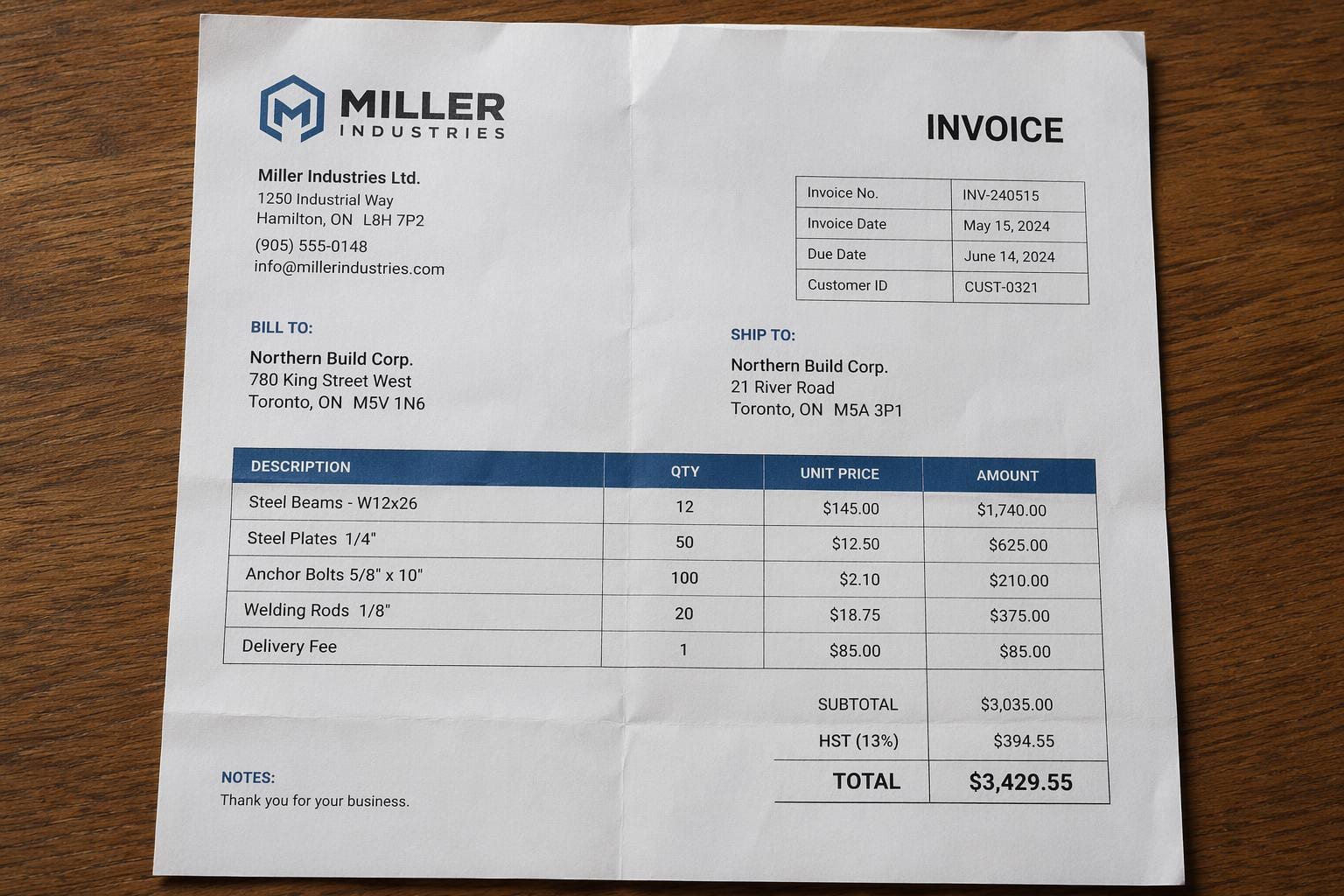
Blur a photo of a golden retriever by a few pixels and you'll still call it a dog. Blur a scanned invoice by the same amount and "$1,987.00" can turn into "$1,387.00" without anyone noticing until the numbers stop adding up. That's the whole problem in one sentence: photos of the world tolerate fuzziness, and pages of text don't. A new paper called MonkeyOCRv2 takes that mismatch seriously, and the fix is more interesting than "train on more documents."
The eyes were trained on the wrong pictures
Every modern document AI system, whether it's parsing a PDF or answering questions about a scanned form, starts with a vision encoder: a neural network that turns an image into a compressed representation the rest of the model can reason about. The problem the MonkeyOCRv2 team points out is that almost all of these encoders, including the ones baked into today's popular multimodal models, were pretrained on natural images. Think ImageNet, LAION, the standard diet of cats, cars, and vacation photos.
That pretraining teaches a network to recognize objects and scenes at a coarse level. A dog is still a dog whether it's slightly blurred, rotated, or photographed from three feet closer. But a page of text is a different kind of image entirely. The difference between "cl" and "d" is a few pixels. A comma versus a period can change a number's meaning. A subscript in a chemical formula sitting one pixel too high or low changes the formula. The paper calls this "character-level visual perception," and it's a real gap: an encoder that's excellent at telling a poodle from a labrador has no particular reason to be good at telling a 3 from an 8 in 8-point font, because nothing in its training ever demanded that level of precision.
This is why bolting a general-purpose vision encoder onto a language model and calling it a document AI system tends to produce something that's fluent but occasionally wrong in ways that are hard to catch. It reads the shape of a page more than it reads the page.
Building the biggest stack of documents anyone has pretrained on
The MonkeyOCRv2 team's answer starts with data: a corpus called MonkeyDoc v2, which by their account is the largest document-image pretraining set built so far, at 113 million images spanning 17 languages. That's not 113 million documents scraped once and left alone. It's the raw material for a specific kind of training that natural-image datasets were never built to support, because a corpus of cat photos doesn't need character-level alignment between pixels and text.
Scale alone wouldn't fix the underlying problem, though. You could pretrain a natural-image-style encoder on 113 million document images and still end up with something that treats a page as one big blurry object, unless the training objective forces the model to care about individual strokes.
Two jobs for one encoder
The actual trick is in how the pretraining works, and it's a genuinely clever piece of design. The model learns two tasks at once, using the same visual backbone:
- Image-to-text generation. Given a document image, produce the text it contains. This is the familiar OCR task, and it teaches the encoder to align what it sees with what the words mean.
- Pixel-level document reconstruction. Given a document image, reconstruct the image itself at the pixel level, preserving character strokes and layout.
Think of it as the difference between a student who reads a page and summarizes it, versus one who has to redraw the page from memory, stroke for stroke. The first task alone can produce a model that gets the gist of a document while smoothing over exactly the fine details, like a small serif or the tail on a lowercase "g," that separate a correct transcription from a plausible-looking wrong one. Forcing the same encoder to also reconstruct pixels means it can't get away with a fuzzy internal representation. It has to keep enough detail around to redraw the stroke, not just guess the word.
Combining the two matters more than either alone. Reconstruction without the text-generation objective would just produce a very good image compressor with no particular understanding of what the marks mean. Text generation without reconstruction is the status quo, and the status quo is what breaks on dense, small, or degraded text.
Testing it where it actually counts
Rather than inventing a single flashy demo, the team swapped MonkeyOCRv2's encoder into existing systems across five distinct document tasks and checked whether performance went up: text recognition, formula recognition, text detection, document tampering detection, and overlapping text segmentation.
That last pair is worth pausing on, because they're not the tasks most OCR marketing talks about. Tampering detection means spotting when a document has been digitally altered, a receipt with a changed total, a certificate with a swapped name. Overlapping text segmentation means correctly separating text when it's stamped, watermarked, or handwritten over printed text, which happens constantly with scanned forms, insurance claims, and old archival records. Both tasks live or die on exactly the pixel-level fidelity the reconstruction objective is built to preserve: you can't detect that a digit was altered if your encoder already threw away the fine detail that would give it away.
Across all five tasks, replacing the original encoder with MonkeyOCRv2's improved results. That consistency is the more meaningful finding here. A model that wins on text recognition but loses on formula recognition would suggest the gains come from overfitting to one benchmark's quirks. Winning across five genuinely different tasks is better evidence that the encoder learned something general about documents rather than something narrow about one dataset.
The number that should make competitors nervous
Here's the result I'd flag if I only had one. The team took their pretrained encoder, froze it completely (no further training on it), paired it with a small language model, and built a 0.7 billion parameter document parsing model.
That model set a new open-source state of the art on MDPBench, a recent benchmark covering both digital-born documents (PDFs exported cleanly from software) and photographed documents (phone snapshots of paper, with all the lighting and angle problems that implies) across 17 languages. It beat the previous best open-source model, a 3 billion parameter system called dots.mocr, by 2.8 percentage points, while using a vision encoder roughly 11 times smaller.
A smaller model beating a larger one isn't automatically impressive on its own; plenty of efficient architectures do that on narrow benchmarks. What makes this result worth taking seriously is where the size reduction comes from. It's not a smarter language model doing more of the work. It's a vision encoder that needs fewer parameters because it was trained on the right kind of data in the first place, instead of trying to compensate for a natural-image encoder's blind spots with a bigger downstream model. That's a meaningfully different lesson than "make the transformer smaller." It says the field has been overpaying for vision capacity that was pointed at the wrong problem.
It's not just for parsing
The paper also tests the frozen encoder as a component in document understanding models, systems that don't just transcribe a document but answer questions about it, summarize it, or reason over its layout. Here they compare against encoders built on CLIP, DINO, and SAM: three of the most widely used vision backbones in multimodal AI, all trained primarily on natural images or general segmentation tasks rather than documents specifically.
Under identical training conditions, the MonkeyOCRv2 encoder outperformed all three across eight benchmarks. That's a useful control: same downstream architecture, same training recipe, only the encoder changes. It isolates the claim to what it should be isolated to, that document-specific visual pretraining produces a better foundation than general-purpose pretraining, rather than being an artifact of a better training pipeline elsewhere in the system.
What the paper doesn't tell you
A few things are worth flagging before anyone treats this as a settled matter.
First, the abstract doesn't report training compute or cost, and neither does the summary available here. Building a 113-million-image pretraining corpus and running the joint objective at that scale is not cheap, and it's unclear whether smaller labs or independent developers could reproduce anything close to this without similar resources. Efficiency at inference time (a 0.7B model) doesn't tell you much about efficiency at training time.
Second, tampering detection and overlapping text segmentation are useful capabilities but they're also comparatively niche benchmarks, and strong scores there don't necessarily predict how the model handles the messiest real-world documents: crumpled receipts, low-contrast fax scans, handwriting mixed with print, documents photographed at an angle under bad lighting. MDPBench does include photographed documents, which is a good sign, but "photographed under benchmark conditions" and "photographed by someone in a warehouse with one hand and a phone flashlight" are not the same test.
Third, there's no mention of licensing, weight availability, or whether MonkeyDoc v2 itself will be released. A lot of the practical value of a paper like this, for people actually building OCR products, depends on whether the pretrained encoder shows up somewhere usable, not just in a benchmark table.
Why it matters for anyone building or buying OCR
If you're evaluating OCR engines, or building a pipeline that has to survive contact with real customer documents, the takeaway isn't "use MonkeyOCRv2 specifically." It's that the vision encoder underneath an OCR or document-parsing system is not an interchangeable commodity, and the pretraining data behind it matters as much as the language model bolted on top. A system built around a general-purpose visual backbone is carrying a structural disadvantage on dense text, small formulas, and altered or overlapping content, regardless of how good its language model is at cleaning up the output afterward.
Practically, that means a few things worth checking when you're comparing engines: how they perform on formula-heavy or small-font documents specifically, not just clean printed pages; how they handle documents where something has been altered or stamped over; and whether claimed accuracy numbers come from digital-born PDFs, photographed documents, or both. The gap between those categories is exactly where general-purpose vision encoders tend to fall apart, and it's exactly where a paper like this one is trying to close the distance.
The broader signal, if the results hold up outside this one paper's benchmarks, is that document AI is starting to grow its own foundation models instead of borrowing ones built for a different job. That's a healthy direction. A field that keeps repurposing cat-and-car vision encoders for invoices and contracts was always going to hit a ceiling somewhere, and this paper is a decent argument that we're finding it.