A Factory That Never Shares Its Photos, But Still Learns to Read Labels
Based on: FedTR: Federated Learning Framework with Transfer Learning for Industrial Visual Inspection — Vikash Sathiamoorthy, Shuo Huai, Hao Kong, Di Liu, Wendy Yong Yi Loy, Christian Makaya, Daren Ho, Ravi Subramaniam, Qian Lin, Weichen Liu
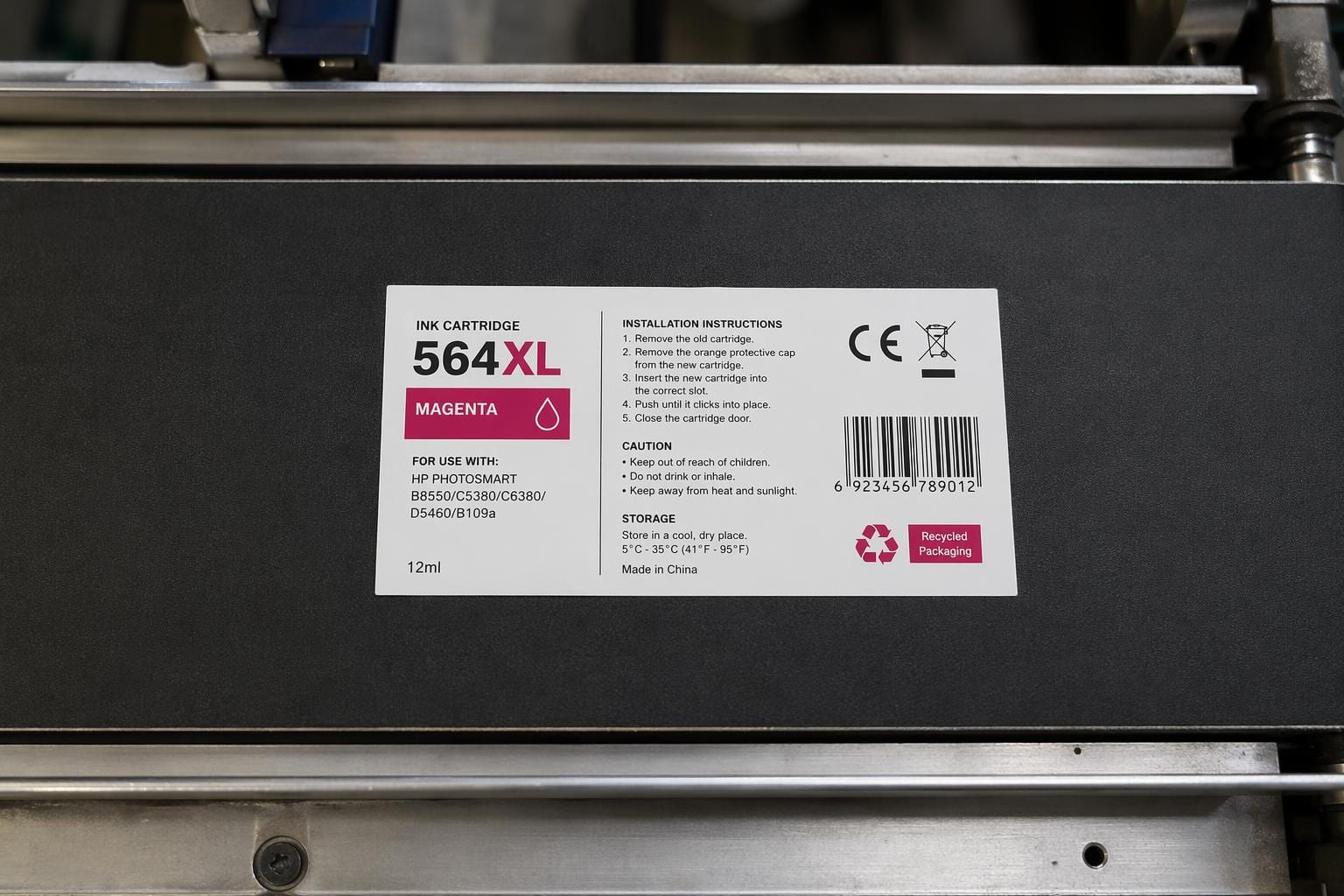
Picture three ink cartridge factories owned by the same company, one in Shenzhen, one in Penang, one in Chennai. Each has cameras on the line photographing labels as they roll past, checking for smudged batch codes, misprinted expiry dates, that kind of thing. Each factory has maybe a few thousand labeled images of defects. None of them can send those images to a shared server, because the images show proprietary label designs, batch numbers tied to customer contracts, and internal QA data nobody wants leaving the building.
That's the setup behind FedTR, a new paper from a team spanning Nanyang Technological University and industry partners. The problem they're solving isn't glamorous. It's the unglamorous, extremely common situation where you need a good OCR model but the training data is scattered across sites that legally or contractually can't pool it.
Why this is a harder problem than it sounds
Federated learning already exists as an answer to "train on data you can't centralize." The basic idea: instead of shipping data to a central server, you ship a model to each site, let it train locally, then send back only the updated model weights (not the images) to be averaged together. Repeat. Nobody's factory floor photos ever leave the factory.
The paper's core claim is that plain federated learning falls over in industrial visual inspection specifically, and it's worth sitting with why. Two things stack against you at once:
- The data is small. A factory doing label QA might have a few thousand images total, not the millions a model normally wants. Federated learning trains a model to a Chennai-sized target from a Chennai-sized amount of data.
- The task is hard. This isn't "is there a defect, yes or no." It's end-to-end text recognition: find the text region on a label, then read it correctly, character by character, batch code by batch code. That's a much less forgiving task than binary classification, and it needs more signal to learn well.
Small data plus a hard task is a bad combination for any deep learning method, federated or not. Averaging together several undertrained models doesn't produce one well-trained model. It just produces an averaged undertrained model.
The fix: borrow strength before you federate
FedTR's answer is to not start federated training from a blank model. Instead:
- Train the model first on a large, public, generic text-recognition dataset. This is transfer learning: the model learns general skills, like what text looks like, how characters are shaped, how to tell a "6" from a smudged "8", from data that has nothing to do with ink cartridges.
- Only after that pretraining does the model get shipped out to the individual factories for federated fine-tuning on their small, private, real datasets.
The analogy that actually holds up here is hiring. You don't train a new employee to read invoices by giving them three days of on-the-job invoices and nothing else. You hire someone who already knows how to read, then teach them your specific invoice format. FedTR does the same thing: the public dataset teaches the model to read in general, and federated learning teaches it your factory's specific fonts, layouts, and defect patterns.
It's a reasonable idea and, frankly, not a wildly novel one. Combining transfer learning and federated learning has been tried in other domains. What the paper actually contributes is showing it works, and quantifying how well, on a genuinely hard and commercially real task: reading defect-riddled labels on ink cartridges.
What they actually tested, and what it cost
The team ran experiments on private ink cartridge datasets under two conditions:
- Homogeneous: each factory's data looks statistically similar to the others (same label style, similar defect types).
- Heterogeneous: each factory's data looks different (different label designs, different defect distributions). This is the much harder, more realistic case for a global company with plants making different products in different countries.
FedTR hit 95.5% word-level accuracy on the homogeneous setup and 94.2% on the heterogeneous one. Word-level accuracy here means the model got the entire word right, not just most of the characters, which is the standard that actually matters for something like a batch code: getting 9 of 10 characters right in "LOT4471X" is a failed read, not a 90% success.
The number worth pausing on is how small the gap is between homogeneous and heterogeneous: 1.3 percentage points. Federated learning has a well-documented failure mode where performance craters when client data distributions diverge (researchers call this the "non-IID problem," where IID stands for independent and identically distributed, a fancy way of saying "your training data doesn't all come from the same statistical distribution"). A small gap here means the transfer-learning pretraining step is doing real work insulating the model from that failure mode, not just adding a marginal boost.
The other headline number: FedTR's federated results are roughly on par with centralized training, meaning training one model on all the data pooled together in one place, which isn't allowed here but serves as the theoretical ceiling. Matching that ceiling without pooling any data is the entire point of the exercise, and the paper backs up the claim with actual numbers instead of just asserting it.
Why it matters if you're building or buying OCR
If you're building document pipelines for anyone with data residency requirements, multi-site manufacturing, healthcare records across hospital systems, financial documents across regional entities, this paper is a useful data point that the "train centrally or don't train at all" tradeoff isn't as binary as it looks.
A few concrete takeaways for anyone evaluating OCR in this kind of environment:
- Pretraining matters more than the federation mechanism itself. The clever part of FedTR isn't the federated averaging, it's mostly standard. The clever part is refusing to start federated training from scratch. If you're stuck with siloed data, the highest-leverage move is usually a strong general-purpose base model, not a more sophisticated aggregation algorithm.
- Don't assume federated learning is a free lunch. The paper is honest that plain FL underperforms on small, hard datasets, which matches what a lot of practitioners have found the hard way. If someone pitches you "just federate it" as a solution to a data-silo problem, ask what the base model was pretrained on.
- Word-level accuracy is the right metric to demand, not character-level. A lot of OCR marketing leans on character accuracy because it's a bigger, better-looking number. For anything downstream that parses whole fields (batch codes, SKUs, dates), character accuracy can hide a model that's useless in practice. 95.5% word accuracy is a genuinely strong number precisely because it's the harder bar.
What's missing, and why you shouldn't over-extrapolate
The paper tests on one company's ink cartridge labels. That's a real, specific, commercially meaningful benchmark, but it's one product category, one paper's private dataset, and the "heterogeneous" setup is still simulated variation within one company's data rather than truly independent organizations with wildly different label conventions.
There's also no discussion of communication cost or how many federated rounds this took to converge, which matters a lot in practice: shipping model updates back and forth between three factories a few times is fine, doing it between three hundred plants (or a truly global company) is a different infrastructure problem entirely. And there's no comparison against other transfer-learning-plus-FL combinations that have appeared in other domains, so it's hard to know if FedTR's specific recipe is better than the obvious alternatives or just the first one someone tried on this dataset.
Still, the direction is sound and the gap between what's shown here and a production deployment is normal engineering work, not a research gap. For a document AI space where a lot of published work never touches a real, private, commercially sensitive dataset, testing on actual ink cartridge QA data from a real manufacturing partner counts for something. It's the difference between a paper that proves a technique works on a benchmark, and one that proves it survives contact with a factory floor.